
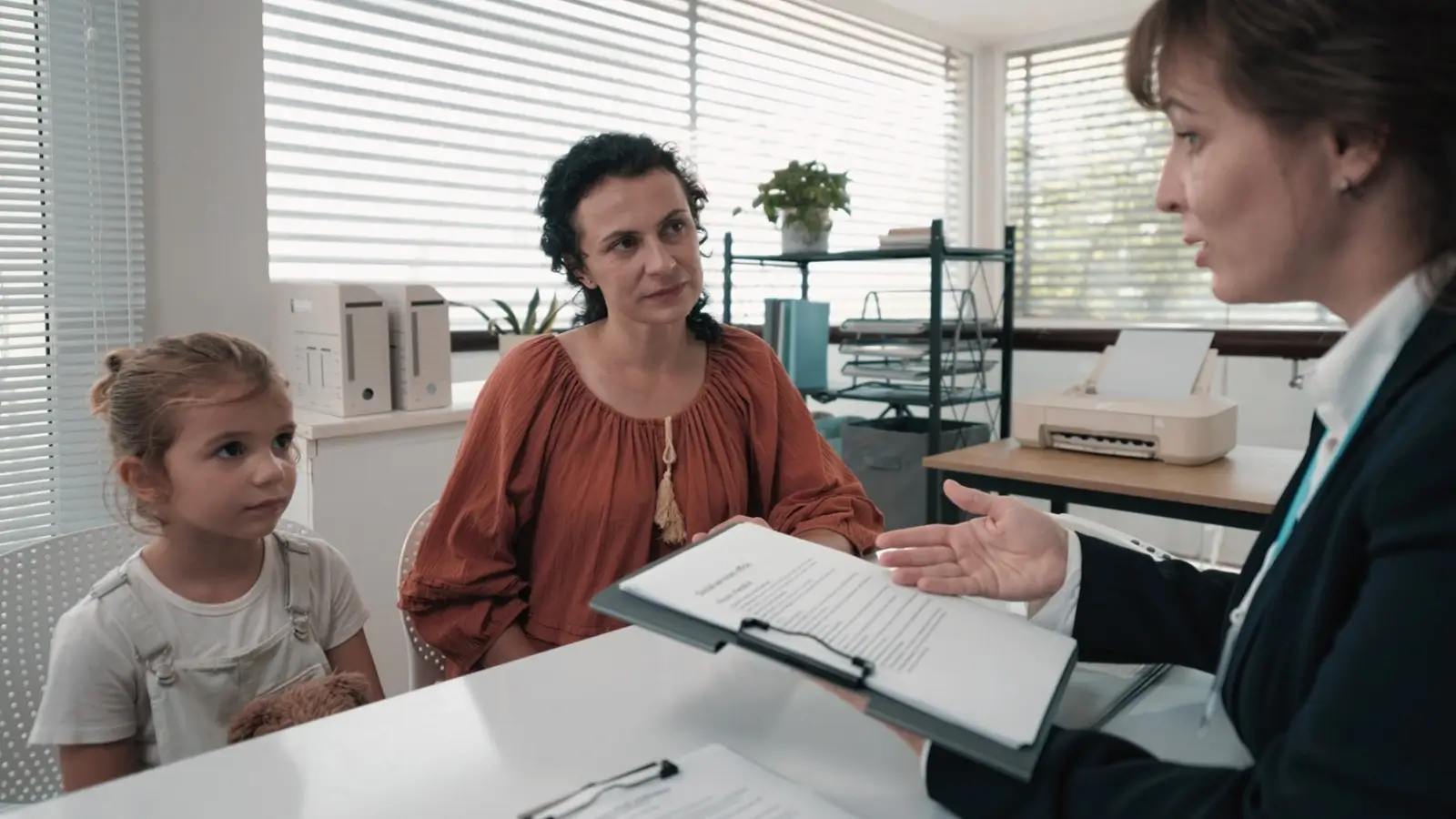
Dissolution of parental rights is a court order that permanently ends the legal relationship between a parent and child. It ends a parent’s legal authority over the child, custody, visitation and future child support. In California, parents generally cannot end their rights simply by signing a private agreement. Only a judge can grant it, usually as part of an adoption or after findings like abandonment.
For a parent considering this step, the questions are often personal: Can an absent parent’s rights be terminated? Does agreeing to an adoption end the obligation to pay child support? Is giving the other parent sole custody the same as giving up parental rights?
These situations involve different legal processes. Understanding the distinction can help you decide what to discuss with a family law attorney.
What Dissolution of Parental Rights Means in California
Dissolution of parental rights, usually called termination of parental rights in California, ends the legal relationship between a parent and child. It goes beyond changing custody: it removes the rights and responsibilities that arise from legal parenthood, subject to exceptions such as unpaid child support.
Custodial rights vs. parental rights
Parental rights concern a person’s legal relationship with their child. Custodial rights address how the child is cared for and who makes decisions.
California recognizes two types of custody:
- Legal custody: Authority to make important decisions about a child’s health, education, and welfare.
- Physical custody: Where the child lives.
A court can give one parent sole legal and physical custody without ending the legal parent-child relationship. Even a parent who has no parenting time may still have a child support obligation.
Parental rights are broader than custody. A parent who loses custody generally remains a legal parent and may ask the court to change custody or visitation orders. Terminating parental rights removes the legal standing to make those requests as the child’s parent. It is intended to permanently end legal parenthood.
Parental rights a parent gives up
Parental rights include authority over a child’s upbringing and legal protections connected to the parent-child relationship. Some depend on existing custody orders; others can continue even when a parent does not have custody.
Once parental rights are terminated, the former parent loses the right, based on parenthood, to:
- Seek custody or visitation. The former parent cannot request parenting time simply because they were previously the child’s legal parent.
- Make decisions about the child’s upbringing. This includes decisions about education, health care, religion, and residence.
- Access records as a parent. California generally protects a parent’s access to medical, dental, and school records even without custody. Termination removes that parental basis for access. See Family Code § 3025.
- Exercise parental rights concerning the child’s earnings. California addresses parents’ entitlement to a minor child’s services and earnings in Family Code § 7500.
- Nominate a guardian in their capacity as a parent. A parent may nominate a guardian under specified conditions, although the court decides the appointment. See Probate Code § 1500.
- Give or withhold parental consent to a later adoption. After termination, the former parent’s consent is no longer required on the basis of that former parental relationship.
- Inherit from or through the child based on parenthood. California bars that inheritance when parental rights have been terminated and the relationship has not been judicially reestablished. This concerns inheritance under intestacy rules, rather than a gift expressly left in a will. See Probate Code § 6452.
Parental obligations and what termination changes
Legal parenthood also carries responsibilities. These include supporting the child financially, providing necessities such as food and shelter, and taking responsibility for the child’s care. Parents with custody also have duties involving supervision and school attendance. Failing to meet these obligations can lead to child support enforcement, fines, or changes to custody.
Terminating parental rights generally ends these ongoing duties and the potential consequences of failing to fulfill them in the future. The former parent generally would no longer face neglect allegations solely for failing to provide parental care or support after those duties legally end. However, termination does not erase past-due child support, excuse earlier abuse or neglect, or remove responsibilities the person takes on by continuing to act as the child’s caregiver.
Termination also does not automatically erase liabilities that arose before the order or obligations a person separately assumed. For example, liability connected to signing a minor’s driver’s license application requires its own analysis; signing that application is not a duty every parent must perform.
These distinctions matter when considering signing away parental rights. Ending legal parenthood has lasting consequences, but it should not be treated as a blanket release from every existing debt or legal responsibility.
Can you voluntarily sign away parental rights?
“Signing away parental rights” sounds like a matter of completing a form. In California, a private agreement between parents generally does not accomplish that result.
An agreement stating that one parent will stop visiting and the other will stop requesting support does not, by itself, terminate parental rights or cancel an existing support order.
Voluntary consent can play a role in an adoption. In a typical stepparent adoption, the child’s other legal parent may consent to the adoption through the required process. If that parent does not consent, the person seeking adoption may need a court determination that consent is unnecessary or an order terminating that parent’s rights. The correct procedure depends partly on the parent’s legal status.
Before signing adoption documents, understand what you are consenting to, when that consent becomes binding, and whether any withdrawal rights apply.
Is signing over parental rights the same as transferring custody?
People often use “signing over parental rights” when they mean allowing a child to live with another parent, grandparent, or relative.
Those arrangements do not necessarily end parenthood. Depending on the circumstances, a family may need a custody order, guardianship, or adoption. Each has different consequences.
Start with the result you need. Are you arranging temporary care? Asking for sole decision-making authority? Planning for a stepparent to become a legal parent? The paperwork should follow that goal.
When can a court terminate parental rights?
A court can free a child from a parent’s custody and control only on specific grounds listed in the Family Code, starting at Section 7820. The main ones are:
- Abandonment (§ 7822)
- Neglect or cruel treatment of the child (§ 7823)
- A disability caused by habitual alcohol or drug use, or by moral depravity, that leaves the parent unable to care for the child (§ 7824)
- A felony conviction whose facts show the parent is unfit (§ 7825)
- A mental disability that leaves the parent unable to care for and control the child adequately (§ 7827)
Each finding must be supported by clear and convincing evidence, which is a higher bar than most family court issues.
Abandonment and the Dissolution of Parental Rights
Abandonment is the ground families run into most, especially in stepparent cases. Under Family Code § 7822, a parent may have abandoned a child by leaving the child with the other parent for one year without support or communication, with the intent to abandon. If the child was left with someone other than a parent, the period is six months.
Failing to support or communicate is treated as presumptive evidence that the parent meant to abandon the child. Token efforts, like one birthday card or a single small payment over a year, may not be enough to defeat that presumption.
Intent still matters. In In re H.D. (2019), a mother left her children with their father while she got treatment for addiction, then went back to family court to seek custody. The stepmother petitioned to end the mother’s rights for abandonment. The appeals court reversed the termination because the record showed the mother had always planned to reunify with her children.
Terminating Parental Rights Through Juvenile Court
A separate path runs through juvenile dependency court. When the county child welfare agency removes a child because of abuse or neglect and the parents don’t reunify, the juvenile court may end parental rights at a permanency hearing under Welfare and Institutions Code § 366.26 so the child can be adopted. Those cases follow their own rules and timelines, and a parent who can’t afford a lawyer can have one appointed.
Stepparent Adoption: The Most Common Path
Most private cases about the dissolution of parental rights are really stepparent adoption cases. A stepparent who wants to adopt a spouse’s or domestic partner’s child needs the other birth parent out of the legal picture first, either by consent or by court order.
According to the California Courts’ stepparent adoption guide, the other parent must be notified and must consent in writing. Consent means giving up parental care, custody and control. In a stepparent adoption, that consent has to be signed in front of a notary, court clerk, court investigator or another authorized official.
If the other parent won’t consent, the next step depends on that parent’s legal status. A presumed parent’s rights can only be ended by a court order freeing the child from their custody and control, which usually means proving abandonment or another legal ground. An alleged father who receives proper notice and doesn’t contest may lose his rights without a full trial. If the other parent has died or can’t be found after a good-faith search, different rules apply.
California also allows a child to have more than two legal parents in some situations. A birth parent can sometimes consent to a stepparent adoption without giving up their own rights. A family law attorney can tell you whether that option fits your family.
How the Process of Terminating Parental Rights Works
The steps vary by county, but most cases follow the same general order:
- File a petition. California has no statewide Judicial Council form for this. The petitioner drafts a petition explaining the legal grounds, and some counties have their own local forms. It’s often filed alongside an Adoption Request (form ADOPT-200).
- Serve the other parent. The parent whose rights are at stake must be formally served with a citation telling them about the hearing.
- Complete the investigation. Under Family Code § 7851, a court investigator, probation officer, licensed clinician or county agency investigates and writes a report with a recommendation. The report usually includes the child’s own feelings about the case. Counties charge investigation fees, and the amounts differ.
- Appoint counsel if needed. If the parent can’t afford a lawyer, the court must appoint one unless the parent knowingly waives that right. The court also considers whether the child needs a separate attorney.
- Attend the hearing. State law says these cases should be decided as quickly as possible, and the hearing is supposed to be set within 45 days of filing. Continuances are allowed for good cause, so real timelines are often longer.
If the judge grants the petition, the adoption can move forward. Once the adoption is final, the stepparent becomes the child’s legal parent with the same rights and responsibilities as a birth parent.
Revoking Parental Rights Consent or Reversing a Termination
“Revoking parental rights” can mean a court taking rights away, which the sections above cover. It can also mean trying to undo consent you already gave. That second meaning is harder.
In a stepparent adoption, a birth parent’s consent can’t be withdrawn without the court’s approval under Family Code § 9005. The judge looks at whether withdrawing consent serves the child’s best interest. If the court approves, the adoption is dismissed. Independent adoptions work differently, and a birth parent there generally has 30 days to revoke consent before it becomes permanent.
After a termination order is final, reversing it is rare. A parent can appeal, and a parent who can’t afford appellate counsel may have one appointed. In juvenile dependency cases, a child who hasn’t been adopted at least three years after termination may ask the court to reinstate parental rights if adoption is no longer the plan. Outside those narrow situations, you should assume the order is permanent.
What to Do If You’re Facing Dissolution of Parental Rights
If you’re a parent hoping your spouse can adopt your child, start by asking whether the other parent will consent. If they won’t, gather proof of how long it’s been since they paid support or contacted the child, such as bank records, child support payment histories, and old texts or emails.
If you’ve been served with a petition, don’t ignore it. File a response, show up to every hearing, and ask the court to appoint a lawyer if you can’t afford one. Collect anything that shows you tried to stay in your child’s life, including messages, gifts and payment records, even if the other parent blocked you.
If you’re thinking about giving up your rights because of child support or a difficult co-parent, talk to an attorney first. Changing the custody schedule or the support order is usually possible and doesn’t cost you your relationship with your child. Our article on the legal standard for child custody modification explains when California courts will change an existing order, and our guide to how California courts decide a child’s best interest covers what judges weigh in any custody decision.
Talk to a Lawyer About Your Parental Rights
Ending a parent’s rights is one of the most serious orders a California family court can make, and it usually can’t be undone. Whether you want to finalize a stepparent adoption or protect your relationship with your child, the outcome often turns on details like how much contact there was and what each parent intended.
Jafari Law & Mediation’s child custody lawyers represent parents in Los Angeles and Orange County. If you’re dealing with a parental rights question, schedule a consultation to talk through your options.

