
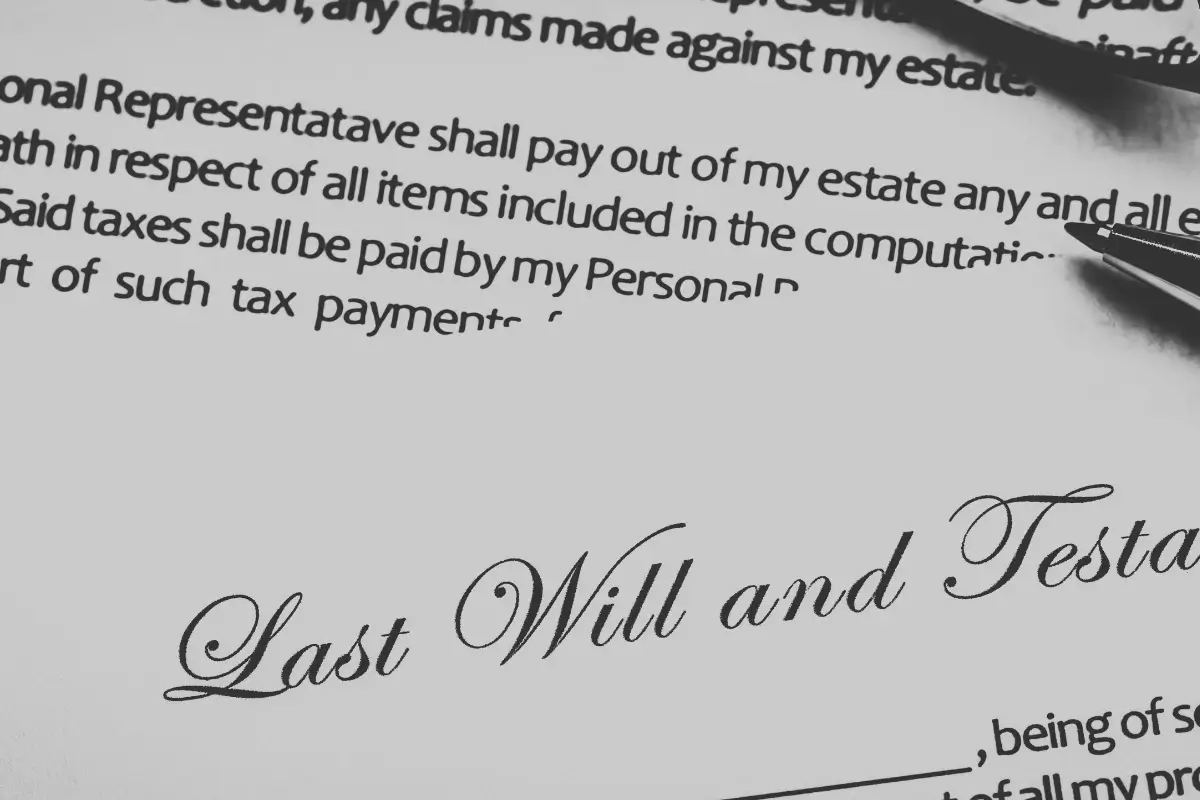
Contesting a will or trust in California means asking the probate court to invalidate the document or one of its terms. The law recognizes six grounds: forgery, lack of due execution, lack of capacity, undue influence, revocation, and disqualification of a beneficiary. Most family challenges run on undue influence.
A will or trust dispute often begins after the funeral, when the family discovers a new will or a recent amendment to an existing trust. The change contradicts what their parent had said, favors the person who provided or managed their care, and was never disclosed to anyone else. This article explains the legal grounds for challenging those changes, the deadlines that apply, and whether a no-contest clause could put your inheritance at risk.
What is the Deadline for Contesting a Will or Trust?
In California, the deadline for contesting a will or trust is generally 120 days, but the event that starts the clock differs. A trust contest usually must be filed within 120 days after the trustee serves the required notice. A will may be contested before probate or within 120 days after it is admitted.
For trusts, Probate Code section 16061.7 requires the trustee to notify the beneficiaries and heirs entitled to notice when a revocable trust becomes irrevocable because the settlor has died. The trustee generally must serve that notice within 60 days. It must also include a boldface warning that any trust contest must be filed within 120 days after service. If the recipient receives a copy of the trust terms during that period, the deadline is extended to 60 days after delivery of the copy, if that date is later.
Wills follow a different process. An interested person may object before the will is admitted to probate. Once it has been admitted, Probate Code section 8270 generally allows 120 days to petition the court to revoke probate. That option is unavailable to someone who participated in an earlier will contest or had actual notice of it in time to join. A limited exception applies to a person who was a minor or incompetent and had no guardian or conservator when the will was admitted; that person may file before the court enters its final distribution order.
Missing the deadline to contest a will or trust does not necessarily eliminate every possible claim. A financial elder-abuse claim involving property taken during a parent’s lifetime may have a separate limitations period. Under Welfare and Institutions Code section 15657.7, such a claim generally must be filed within four years after the plaintiff discovered, or reasonably should have discovered, the facts constituting the abuse.
What are the Grounds for Contesting a Will or Trust in California
In California, a will or trust may be contested for lack of capacity, undue influence, fraud, menace, duress, forgery, improper execution, revocation, or the legal disqualification of a beneficiary. An unexpected or unequal inheritance is not enough by itself; the challenger must prove a recognized legal ground with evidence tied to the document or the circumstances in which it was created.
For purposes of California’s no-contest-clause rules, Probate Code section 21310 classifies challenges based on these grounds as “direct contests.” Each ground requires different evidence, so identifying the right one is an important first step.
Revocation
Revocation means the document was validly canceled before death and therefore should not be enforced.
Under Probate Code section 6120, a will may be revoked in two ways. A later will may expressly revoke an earlier one or contain terms that are inconsistent with it. A will may also be revoked if the testator burns, tears, cancels, obliterates, or destroys it with the intent to revoke it. Someone else may perform the act only in the testator’s presence and at the testator’s direction.
Intent is essential. A will accidentally destroyed in a fire or flood is not revoked merely because the original no longer exists. Nor can a relative revoke someone else’s will by throwing it away without authorization.
Revocation disputes often arise when a later document is discovered or when someone asks the court to admit a copy because the original cannot be found. If the original was last in the testator’s possession, the testator remained competent until death, and neither the will nor a duplicate original can be located, Probate Code section 6124 creates a presumption that the testator destroyed it with the intent to revoke it.
Lack of due execution
Lack of due execution means the document was not created or signed in the manner required by law.
For an ordinary witnessed will, Probate Code section 6110 requires a written document, the testator’s signature, and the signatures of at least two witnesses. Both witnesses must have been present at the same time when they observed the signing or the testator’s acknowledgment of the signature or will, and each must understand that the document is the testator’s will.
Missing signatures, only one witness, or witnesses who were not present together for the signing or acknowledgment may create an execution problem. California law nevertheless allows some defective wills to be admitted if the person offering the will proves by clear and convincing evidence that the testator intended the signed document to be a will. A technical defect therefore does not always invalidate the document.
Trusts generally do not require witnesses, but a trust amendment must comply with an authorized method of amendment. Under Probate Code section 15402, a revocable trust may generally be amended through the statutory revocation procedure unless the trust provides otherwise. In Haggerty v. Thornton, the California Supreme Court held that a trust’s stated amendment method is not exclusive unless the trust makes it exclusive or expressly prevents use of the statutory method.
The practical question is whether the trust required one particular amendment procedure and, if so, whether that procedure was followed. The exact language matters. A provision stating that the trust “may” be amended in a particular way may leave other methods available, while language making that method exclusive can require strict compliance.
Lack of capacity
A lack-of-capacity claim argues that the person did not have the mental ability required to understand the document when it was signed. Capacity and undue influence are separate grounds, although they are often alleged together because the same evidence may support both.
California does not apply one capacity standard to every estate-planning document. A will is governed by the relatively low testamentary-capacity standard in Probate Code section 6100.5. The testator must generally understand that they are making a will, recognize the nature and extent of their property, and understand their relationships with the people affected by the will.
Capacity to create or amend a trust may require a greater level of understanding under Probate Code sections 810 through 812. The applicable standard depends in part on the complexity of the transaction. A simple amendment that merely changes beneficiaries may be evaluated more like a will, while an amendment that restructures ownership, creates ongoing duties, or changes complex financial arrangements may require greater mental capacity.
A medical diagnosis alone does not establish incapacity. The evidence must connect a specific mental deficit to the decision being challenged. Medical records, attorney notes, witness observations, and evidence of the person’s functioning near the signing date can therefore be especially important. Our article on the competency test for wills and trusts explains the different standards in more detail.
Undue influence
Undue influence occurs when excessive persuasion overcomes a person’s free will and produces an inequitable result.
Under Welfare and Institutions Code section 15610.70, courts consider four broad factors: the person’s vulnerability, the alleged influencer’s apparent authority, the actions or tactics used, and the fairness of the result.
Vulnerability is not limited to dementia. It may arise from illness, disability, injury, emotional distress, isolation, dependency, or impaired cognitive function. Relevant tactics may include controlling medication, access to information, contact with family members, or other necessities of life. Haste, secrecy, intimidation, coercion, and initiating estate-plan changes at unusual times or places may also support a claim.
An unequal result is relevant, but it is not enough by itself. Being disinherited does not prove undue influence without evidence showing how the change was obtained. Our guide to undue influence in California elder cases examines each factor in greater detail.
Fraud
Fraud means the document or a gift within it resulted from intentional deception.
Fraud may involve deception about the document itself. For example, a person may be told that they are signing a power of attorney when the document is actually a trust amendment. Fraud may also involve a lie that induces the person to change the estate plan, such as a false claim that another child stole money or no longer wants contact.
The second type can be more difficult to prove because the alleged statements often occur in private. Communications, witness accounts, financial records, and changes in the person’s behavior or expressed intentions may help establish what was said and whether it affected the estate plan.
Duress and menace
Duress and menace involve coercion or threats rather than persuasion alone.
California Civil Code section 1569 defines duress to include certain forms of unlawful confinement or detention of a person or property. Civil Code section 1570 defines menace as a threat of duress, unlawful and violent injury to a person or property, or injury to a person’s character.
That last category can include a threat to damage someone’s reputation, even when no physical harm is threatened. Whether a particular statement qualifies depends on its language, context, and effect on the person who signed.
These claims usually require proof of an identifiable act or threat. Because the conduct often occurs privately, duress and menace are frequently alleged alongside undue influence when the evidence supports more than one theory.
Beneficiary disqualification
Some transfers are presumed to result from fraud or undue influence because of the beneficiary’s role or relationship with the person who made the gift.
Under Probate Code section 21380, the presumption can apply to gifts made to the person who drafted the instrument, certain fiduciaries who transcribed or caused it to be transcribed, and a care custodian of a dependent adult when the instrument was signed during the period of care or within 90 days before or after it. The statute also covers certain relatives, employees, cohabitants, and business associates of those individuals, subject to statutory exceptions.
When the presumption applies, the beneficiary generally must prove by clear and convincing evidence that the transfer was not caused by fraud or undue influence. For a transfer to the person who drafted the instrument, or to certain people associated with the drafter, the presumption is conclusive. A beneficiary who fails to rebut a rebuttable presumption must pay the proceeding’s costs, including reasonable attorney’s fees.
Interested witnesses are governed by a separate rule. Under Probate Code section 6112, a will is not invalid merely because a beneficiary witnessed it. Unless two other disinterested witnesses also signed, however, the gift to the interested witness is presumed to have been procured through duress, menace, fraud, or undue influence. If the witness cannot rebut that presumption, the witness may keep no more than the share they would have received if the will had not been established.
A properly completed certificate of independent review may prevent the section 21380 presumption from applying. Probate Code section 21384 requires an independent attorney to counsel the transferor outside the presence of heirs and proposed beneficiaries, evaluate whether the transfer resulted from fraud or undue influence, and sign the required certificate. Whether the attorney was truly independent and followed the statutory procedure may itself become disputed.
A beneficiary-disqualification claim generally targets a particular gift rather than invalidating the entire estate plan. The remaining provisions may continue to operate, with the failed gift distributed according to the document and applicable law. These and related statutes are collected in our California Probate Codes resource.
Forgery
Forgery challenges the authenticity of the document. The claim may be that the parent never signed it, someone copied or imitated the signature, the document was fabricated, or pages were changed after signing.
This differs from fraud. Fraud generally accepts that the person signed but argues that deception caused the signature or the resulting gift. Forgery argues that the signature or document is not genuine at all.
Forgery is also proved differently. Relevant evidence may include the original document, handwriting comparisons, expert examination, inconsistent typefaces or formatting, altered pages, electronic metadata, and verified signatures from the same period. The condition and history of the original document can be just as important as testimony about the circumstances surrounding it.
How Contesting a Will or Trust Works in California
A contest is a petition filed in probate court rather than an ordinary civil lawsuit. For trusts, Probate Code section 17200 allows a trustee or beneficiary to petition the court concerning the trust, and it expressly includes determining the validity of a trust provision. For wills, the statute speaks in terms of an interested person.
Standing is worth resolving early. If the amendment you are challenging removed you, you may not appear as a beneficiary under the document now in force, and that has to be established rather than assumed. Someone claiming under an earlier instrument is generally positioned differently from a stranger to the estate.
The case is built from the documents and the timeline: every prior version of the instrument, the drafting attorney’s file, and the medical and financial records from the period. Filing is frequently what makes that evidence obtainable, since banks and drafting attorneys do not hand records to a concerned relative. Our guide to how to prove financial elder abuse covers the evidence side.
No-Contest Clauses and the Risk of Contesting a Will or Trust
A no-contest clause does not automatically prevent you from challenging a will or trust, nor does filing a contest automatically cause you to lose your inheritance. In California, the clause generally applies to a direct contest only when the challenge is filed without probable cause.
Probate Code section 21311 limits enforcement of no-contest clauses to three types of filings: a direct contest brought without probable cause, a claim that the transferred property did not belong to the person who transferred it, and a creditor’s claim. The second and third categories apply only when the no-contest clause expressly covers them.
The central question is whether the contestant had probable cause. The statute defines probable cause as facts known at the time of filing that would lead a reasonable person to believe there was a reasonable likelihood of obtaining the requested relief after further investigation or discovery.
That standard focuses on what the contestant knew when the case was filed, not simply on whether the contestant ultimately won. Losing a contest does not, by itself, mean the challenge lacked probable cause or that the inheritance must be forfeited. The greater risk is filing based only on suspicion, disappointment, or an unsupported hunch. That is why the available evidence and legal grounds should be assessed before the petition is filed.
If the Contest Succeeds
A successful contest invalidates the instrument or the specific provision procured improperly. Where an earlier valid will or trust exists, it generally governs instead, which is why identifying the prior version early matters. Where none exists, California’s intestacy rules decide who inherits.
Two further remedies often travel with these cases. Where property was taken during your parent’s lifetime rather than only redirected at death, a petition under Probate Code section 850 can recover it, and section 859 provides for liability of twice the value of property taken in bad faith or through financial elder abuse. Our guide to financial elder abuse in California covers that side.
California can also disinherit an abuser outright. Probate Code section 259 provides that a person may be deemed to have predeceased the decedent where clear and convincing evidence establishes liability for physical abuse, neglect, or financial abuse of an elder, along with findings of bad faith and of recklessness, oppression, fraud, or malice. The requirements are demanding and the effect is limited in scope rather than automatic.
Talking to an Attorney
If you have received a trustee’s notification, the date on it is the most important fact in your situation. Bring it, along with any version of the document you have and a rough timeline of your parent’s last few years.
You do not need to have decided whether to contest. Understanding which grounds are realistically available, whether you have standing, and how long you have is a conversation worth having early rather than in the final weeks. If a parent or grandparent’s estate plan in Los Angeles or Orange County changed in a way you believe was not truly theirs, the team at Jafari Law and Mediation Office can tell you where the case is strong and where it is not.
