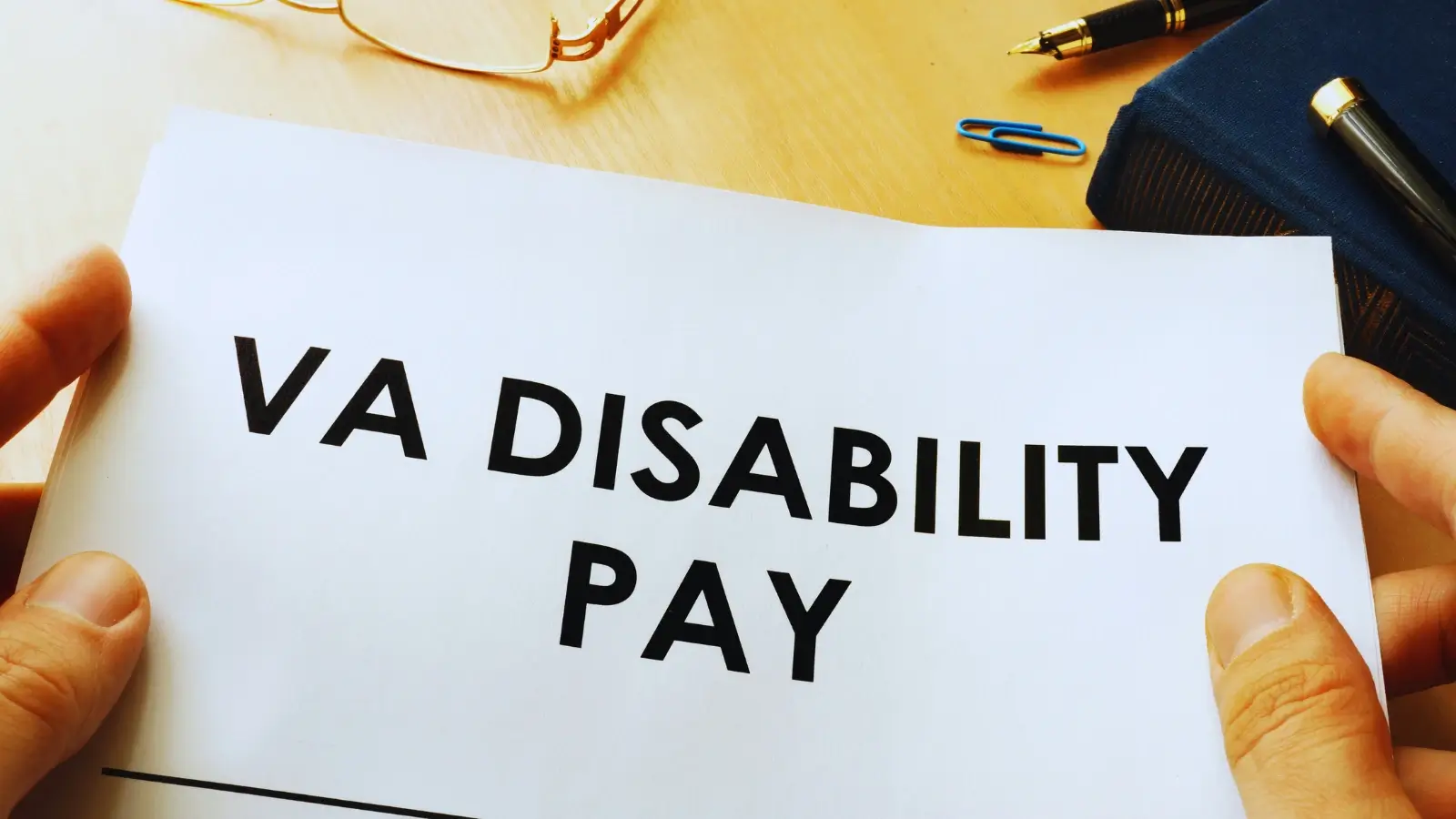
Yes, in most California divorce cases VA disability counts as income in divorce for both spousal support and child support, even though it cannot be divided as property. California Family Code treats veterans benefits that are not based on need as income. VA disability compensation is paid based on a service-connected disability rating, not on the veteran’s financial need. Because eligibility turns on the disability, not need, it is “not based on need.” Both federal and state courts have confirmed that judges can consider these tax-free payments when setting support. What courts cannot do is hand your former spouse a slice of the benefit itself as part of the property split.
“Does VA Disability Count as Income?” can mean a lot of things. Below is a clear breakdown of how VA disability is treated for alimony, child support, garnishment, and property division under California and federal law, including a major rule change that took effect in February 2026.
Does VA Disability Count as Income for Alimony in California?
In California, VA disability compensation generally counts as income when a court decides spousal support, also called alimony. When setting support under California Family Code § 4320, a judge looks at each spouse’s earning capacity, needs, and ability to pay. A veteran’s monthly disability check is part of that financial picture.
This is true no matter which spouse is the disabled veteran.
When the Payer Is the Disabled Veteran
If you receive VA disability and you are the higher earner, a California court can count those benefits as part of your income when deciding how much spousal support you pay. The fact that the money is tax-free and comes from the Department of Veterans Affairs does not shield it from being considered. Courts treat it like any other source of money available to meet a support obligation.
When the Payee Is the Disabled Veteran
If you are the disabled veteran and you are the one who might receive support, your VA disability also counts as income that you already have coming in. That means the court factors it into your needs and resources. A larger disability benefit can reduce the amount of spousal support you receive, because you have more income to meet your own expenses. It does not disqualify you from receiving support, but it is part of the math.
The key federal case here is Rose v. Rose, 481 U.S. 619 (1987), where the U.S. Supreme Court held that a state court can require a disabled veteran to pay family support out of disability benefits, even when those benefits are the veteran’s only source of income. The Court reasoned that Congress intended VA disability to support the veteran and the veteran’s family, not just the veteran alone.
Does It Matter When VA Disability Benefits Started?
For income purposes, the timing of when your benefits began usually does not change whether they count toward support. Whether the disability rating came through before the marriage, during the marriage, or after you separated, the monthly payment you receive now is current income. Courts look at the money flowing in today when they calculate support, not the date the award was granted.
Timing matters far more for a different question: property division. California is a community property state under California Family Code § 760, which means most assets earned during marriage are split. VA disability compensation, however, is treated as the veteran’s separate property and is not divided regardless of when it started. So while the start date rarely affects the support calculation, the benefit itself stays with the veteran in the property settlement either way.
One area where timing does have a real effect is military retirement pay, which often travels alongside disability in these cases. That issue is explained in the property section below.
Does VA Disability Count as Income for Child Support in California?
Yes. For child support, the answer is even more direct than for alimony. California Family Code § 4058 defines a parent’s annual gross income as “income from whatever source derived” and specifically lists “veterans’ benefits that are not based on need.” VA disability compensation is not a need-based program, so it falls squarely inside the definition.
California uses a guideline formula that runs on each parent’s net disposable income and the time each parent spends with the children. Because VA disability counts as income, it goes into that formula like wages or a pension would. A parent cannot leave their disability check off their Income and Expense Declaration (Form FL-150) on the theory that it is protected federal money.
There is one important exception built into the statute. Section 4058 excludes income from “any public assistance program, eligibility for which is based on a determination of need.” If a veteran receives a need-based benefit, such as a VA pension paid to low-income wartime veterans rather than standard service-connected disability compensation, that portion may be excluded. The distinction is between need-based benefits, which can be left out, and service-connected disability compensation, which counts.
Can VA Disability Be Garnished for Child Support or Alimony?
This is where many veterans get bad information. The short version is that VA disability compensation enjoys strong protection from ordinary creditors, but family support is treated differently from a regular debt.
The Federal Protection and Its Limits
Under 38 U.S.C. § 5301, VA benefits are generally exempt from taxation, exempt from creditors’ claims, and not subject to attachment, levy, or seizure “by or under any legal or equitable process whatever.” Read alone, that sounds airtight. But the same statute contains the phrase “except to the extent specifically authorized by law,” and that phrase is the opening that support obligations use.
Family members are not treated as ordinary creditors. In Rose v. Rose, the Supreme Court made clear that the anti-attachment language in Title 38 does not prevent a state court from ordering a veteran to support a spouse or children, and the court can enforce that order, including through contempt, even when disability benefits are the only funds available.
Two Different Ways the Money Can Reach Your Family
There are two separate mechanisms people confuse:
- State court enforcement. Once a California court counts your VA disability as income and orders support, that order is enforceable. The court is not garnishing the federal payment at the source. It is holding you responsible for paying support out of your total income, and the disability money is part of that income.
- VA apportionment. Apportionment is a separate VA process under 38 U.S.C. § 5307 and 38 CFR § 3.450, where the VA itself pays part of a veteran’s benefit directly to a dependent.
A Major 2026 Change to VA Apportionment
If you have read older articles about apportionment, be aware that the rules changed. Effective February 9, 2026, the VA finalized a rule that stops granting new need-based apportionments of compensation, pension, and Dependency and Indemnity Compensation in most situations. The VA now directs these support disputes to state family courts, which it views as better equipped to weigh family finances.
A few practical points on the new rule:
- New need-based apportionment requests are generally denied as of February 9, 2026.
- Dependents already receiving an apportionment before that date keep it under a grandfather provision.
- Narrow exceptions remain, mainly when the veteran is incarcerated for a felony or is an incompetent veteran institutionalized at government expense.
The takeaway for Californians: the practical path for a former spouse or child seeking support from a veteran’s income now runs through the California family court, not the VA apportionment process. The court can still count disability as income and order support.
Is a Divorced Spouse Entitled to VA Disability Benefits?
No. A divorced spouse is not entitled to a share of the veteran’s VA disability benefits as property. This is one of the clearest rules in this area of law, and it comes from federal law that overrides state community property rules.
The Uniformed Services Former Spouses’ Protection Act (10 U.S.C. § 1408) lets state courts divide “disposable retired pay” as marital property, but it specifically excludes military retirement pay that a veteran waived to receive VA disability benefits. In Mansell v. Mansell, 490 U.S. 581 (1989), a California case that reached the U.S. Supreme Court, the Court held that federal law bars state courts from treating waived retired pay, and the disability benefits themselves, as divisible community property.
That creates a sharp line worth understanding:
- VA disability compensation: Cannot be divided as property in your divorce. It stays with the veteran.
- Military retirement pay: Can be divided as community property to the extent it is “disposable retired pay” under the USFSPA.
This is exactly why the disability-versus-retirement distinction becomes a battleground in military divorces. When a veteran waives a portion of taxable retirement pay to receive tax-free disability pay, the waived amount drops out of the divisible pot. The Supreme Court reinforced this in Howell v. Howell (2017), holding that a state court cannot order a veteran to reimburse a former spouse for the share of retirement pay lost to a later disability waiver.
A former spouse may keep certain other benefits, such as continued health coverage, only if strict eligibility rules are met, including the well-known 20/20/20 rule tied to length of marriage and overlapping service. Those benefits are separate from disability compensation and have their own requirements.
If you are sorting through how retirement, disability, and support interact in your case, the team’s Military Divorce Attorneys in Los Angeles and Orange County can walk you through how California courts apply these rules to your specific numbers.
What This Means If You Are Facing a Military Divorce in California
The rules above can feel contradictory until you separate the two questions courts actually ask. One question is whether VA disability can be divided as property. The answer is no. The other question is whether it counts as income for support. The answer is usually yes. Both can be true at the same time, and they often are.
A few steps can protect you whether you are the veteran or the other spouse:
- Report the income accurately. A veteran must disclose disability compensation on the Income and Expense Declaration. Hiding it invites sanctions and a do-over of the support order.
- Separate disability from retirement early. Get clear on how much income is service-connected disability versus divisible retirement pay, because the difference changes both property division and support.
- Document need-based versus service-connected benefits. If any portion is genuinely need-based, that portion may be excluded from the child support income calculation under Section 4058.
- Use the family court, not the VA, for support. After the February 2026 rule change, California courts are the realistic venue for support tied to a veteran’s income.
VA disability sits at the crossroads of federal protection and state family law, and small details about the type of benefit and the type of order can swing the outcome by hundreds of dollars a month. If you are a veteran or the spouse of one and you are heading into a divorce, talking with an experienced California family law attorney can help you understand exactly how these rules apply to your situation and make sure your support and property numbers are calculated correctly from the start.
